
Why AI CRM Is No Longer Optional for Sales Teams in 2026
The conversation has shifted. A year ago, sales teams were still debating whether AI belonged in their CRM stack. In 2026, that debate is settled — and the data is unambiguous. According to Salesforce's State of Sales report, 81% of sales teams have either fully implemented AI or are actively experimenting with it, up from roughly half just two years prior. The laggards aren't being cautious; they're falling behind.
But here's the nuance that most coverage misses: having AI tools and using them well are completely different things. The gap between high-performing AI-enabled teams and teams that simply purchased an AI-labeled CRM is wider than ever. This guide breaks down what's actually changing in sales, what the numbers say, and how to pick the right AI CRM for where your startup is today.
What AI Actually Does Inside a Modern CRM
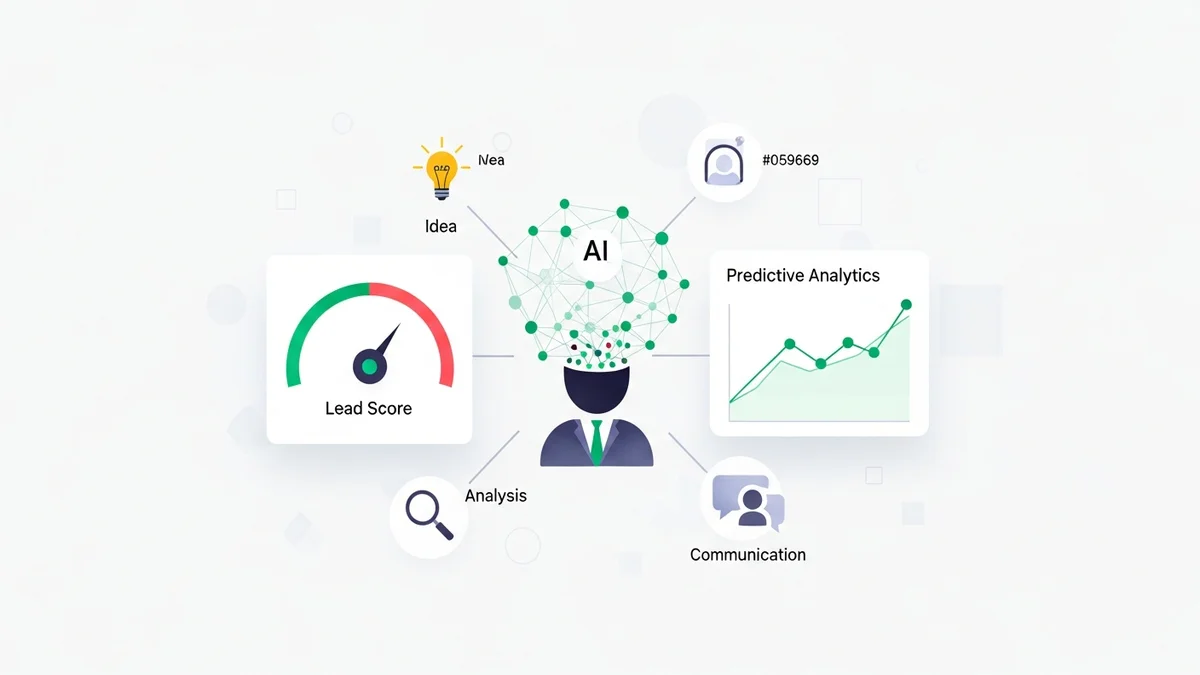
The marketing language around AI CRMs tends toward the grandiose. "Transform your pipeline." "10x your productivity." The reality is more specific — and more interesting. AI in a CRM operates across three distinct layers, and understanding each helps you cut through vendor noise.
Automation of Low-Value Work
The most immediate and measurable win. Research from MarketsandMarkets shows the average salesperson spends less than three hours daily actually selling — the rest is consumed by data entry, research, and administrative overhead. AI handles the mechanical work: logging calls, updating deal stages, drafting follow-up emails, scheduling sequences. Platforms like HubSpot CRM have embedded AI assistants directly into deal views so reps aren't context-switching to generate outreach.
Predictive Scoring and Signal Detection
This is where the real competitive advantage lives. Rather than working static prospect lists, AI-powered CRMs ingest real-time buying signals — job changes, funding rounds, intent data, website visits — and surface them to reps at the moment they matter. The payoff is dramatic: signal-personalized outreach achieves 15–25% reply rates compared to the 3–5% industry average for cold email. That's not a marginal improvement; it's a structural shift in how pipeline gets built.
Forecasting and Revenue Intelligence
Traditional sales forecasts are educated guesses dressed up as data. AI forecasting pulls from deal history, rep behavior, engagement patterns, and market signals to produce predictions with actual confidence intervals. Gartner's 2025–2026 predictions point to AI-driven forecasting as one of the highest-ROI applications in the sales tech stack — not because it replaces judgment, but because it grounds it in pattern recognition humans can't do manually at scale.
The Numbers That Actually Make the Case
Vendor claims are easy to produce. Cross-referenced research data is harder to argue with. Here's what the major research bodies found when they measured AI's impact on sales outcomes:
| Metric | AI-Enabled Teams | Non-AI Teams | Source |
|---|---|---|---|
| Revenue growth rate (teams reporting growth) | 83% | 66% | Salesforce State of Sales, 2024 |
| Likelihood of revenue growth | 1.3x more likely | Baseline | Salesforce, 2024 |
| Cold email reply rate (signal-personalized) | 15–25% | 3–5% (industry avg) | Instantly 2026 / Belkins 2025 |
| Productivity uplift from AI tools | Up to 30% | — | MarketsandMarkets, 2026 |
| Revenue increase from AI implementation | Up to 25% | — | MarketsandMarkets, 2026 |
| Teams planning to increase AI investment | 92% | — | MarketsandMarkets, 2026 |
The 17-point gap in revenue growth (83% vs 66%) is the number that should get a startup founder's attention. It means AI adoption isn't a nice-to-have for competitive positioning — it's directly correlated with whether your sales org grows or stagnates.
Newsletter
Get the latest SaaS reviews in your inbox
By subscribing, you agree to receive email updates. Unsubscribe any time. Privacy policy.
The AI SDR market context adds further weight: this segment is projected to reach $15.01 billion by 2030, growing at a 29.5% CAGR (MarketsandMarkets, 2025). Twenty-two percent of sales teams have already fully replaced human SDRs with AI. That number will not stop climbing.
Signal-Based Selling: The Strategy Separating Winners from Everyone Else
The most important shift in how AI is changing sales isn't a feature — it's a methodology. Signal-based selling replaces the traditional approach of working static lead lists with a dynamic model: your CRM monitors dozens of real-time triggers and surfaces the right prospects at the right moment.
What Counts as a Signal
Buying signals come in several categories. Intent signals indicate a company is actively researching solutions in your category — they've been visiting competitor pages, downloading comparison guides, or searching relevant terms. Behavioral signals come from your own data: a prospect opened your email three times in 24 hours, a contact visited your pricing page twice this week. Event signals are external: a funding announcement, a key executive hire, a merger.
The most effective AI CRMs aggregate all three and present them in the context of existing deals and contacts. Salesforce Einstein has built signal aggregation directly into its Sales Cloud layer, correlating external intent data with in-CRM activity. For startups that can't afford that price point, the signal-detection capabilities in Pipedrive's AI assistant or Close's activity intelligence offer meaningful approximations at a fraction of the cost.
Why Generic Outreach Is a Dead End
The 3–5% cold email reply rate that defines the industry average isn't just a mediocre outcome — it's an active drag. Low reply rates hurt sender reputation, waste rep time, and contribute to list fatigue. The 15–25% reply rates achieved through signal-personalized outreach aren't just about better copy; they're about better timing and better targeting. Sending the right message when someone is actively in a buying window is categorically different from broadcasting into the void.
How Top CRMs Compare on AI Capabilities
Not all AI CRM features are created equal, and startup teams need to be honest about what they actually need versus what looks impressive in a demo. Here's a grounded comparison of where the major platforms stand:
| CRM | AI Highlights | Best For | Notable Limitation |
|---|---|---|---|
| Salesforce | Einstein AI (forecasting, scoring, generative email), Agentforce autonomous agents | Mid-market to enterprise with dedicated admin | High implementation cost and complexity for early-stage teams |
| HubSpot CRM | AI content assistant, predictive lead scoring, deal stage automation, Breeze AI agents | Startups scaling from 0–50 reps with marketing alignment | Advanced AI features locked behind higher tiers |
| Pipedrive | AI Sales Assistant (deal insights, next-action suggestions), AI email generation | SMB sales teams focused on pipeline management | Signal-based prospecting less developed than enterprise alternatives |
| Close | AI call summaries, GPT-powered email drafts, activity-based lead scoring | Inside sales teams with high call volume | Lighter on predictive forecasting |
| Attio | AI-powered enrichment, automated data syncing, intelligent relationship scoring | VC-backed startups needing flexible, modern CRM architecture | Newer platform; AI feature set still maturing |
| Freshsales | Freddy AI (lead scoring, deal insights, email generation, next best action) | Mid-size teams wanting AI without enterprise pricing | Freddy AI depth varies significantly by plan tier |
The honest take: for a seed-to-Series A startup, the AI features in HubSpot CRM or Close will outperform what most teams actually use from an enterprise platform. The sophistication ceiling of Salesforce's Einstein only pays off when you have the data volume and admin resources to configure it properly. Buying ahead of your operational maturity is one of the most common and expensive CRM mistakes startups make.
What to Actually Look For When Choosing an AI CRM
The checklist approach to evaluating AI CRM features produces bad decisions. Instead, think in terms of the problems you're solving today and the data infrastructure you're building for tomorrow.
Does It Reduce the Right Kind of Work?
Not all automation creates equal value. If your team's biggest time drain is manual data entry, prioritize AI that handles logging and enrichment automatically — Salesflare built its entire product around this premise, auto-populating contact records from email and calendar activity. If your bottleneck is outreach volume, prioritize AI-assisted email generation and sequencing. Match the tool's strengths to your actual bottleneck.
Is the AI Grounded in Your Data?
Generic AI suggestions are marginally useful. AI that's trained on your pipeline history, your industry, and your specific customer behavior is substantively different. The 92% of companies planning to increase AI investment over the next three years (MarketsandMarkets, 2026) are largely betting that context-specific AI will outperform general-purpose tools — and they're right. Ask vendors specifically: where does the AI's training data come from, and how does it personalize to my team's history?
Integration Depth Matters More Than Feature Count
An AI feature that requires manual export/import to work is not a feature — it's a liability. The most valuable AI CRM implementations are those where signals, enrichment, and recommendations flow automatically through the tool your reps already use daily. A CRM with 10 AI features that live natively inside the workflow beats a platform with 30 AI features that require separate logins and manual syncs.
The Honest Bottom Line on AI CRM in 2026
AI has genuinely changed sales. Not in the breathless, everything-is-different way that marketing copy suggests, but in a structural, measurable way that shows up in conversion rates, cycle lengths, and revenue growth numbers. The 17-point gap in revenue growth between AI-enabled and non-AI sales teams (Salesforce, 2024) is not a statistical anomaly — it reflects a real operational advantage that compounds over time.
The practical implication for startups: don't evaluate CRMs on whether they have AI, because almost all of them do now. Evaluate them on whether the AI is embedded where your reps actually work, whether it surfaces actionable signals rather than decorative dashboards, and whether it reduces the administrative burden that's costing your team more than two-thirds of their working day.
The $4.4 trillion in productivity growth that McKinsey attributes to corporate AI adoption doesn't accrue to teams that buy AI tools — it accrues to teams that deploy them intelligently. The same principle applies to your CRM decision. Choose the platform where AI works with your process, not against it, and you'll be in the 83% of sales teams that are actually seeing revenue growth.