
HubSpot CRM Integrations: Full Review for Startups (2026)
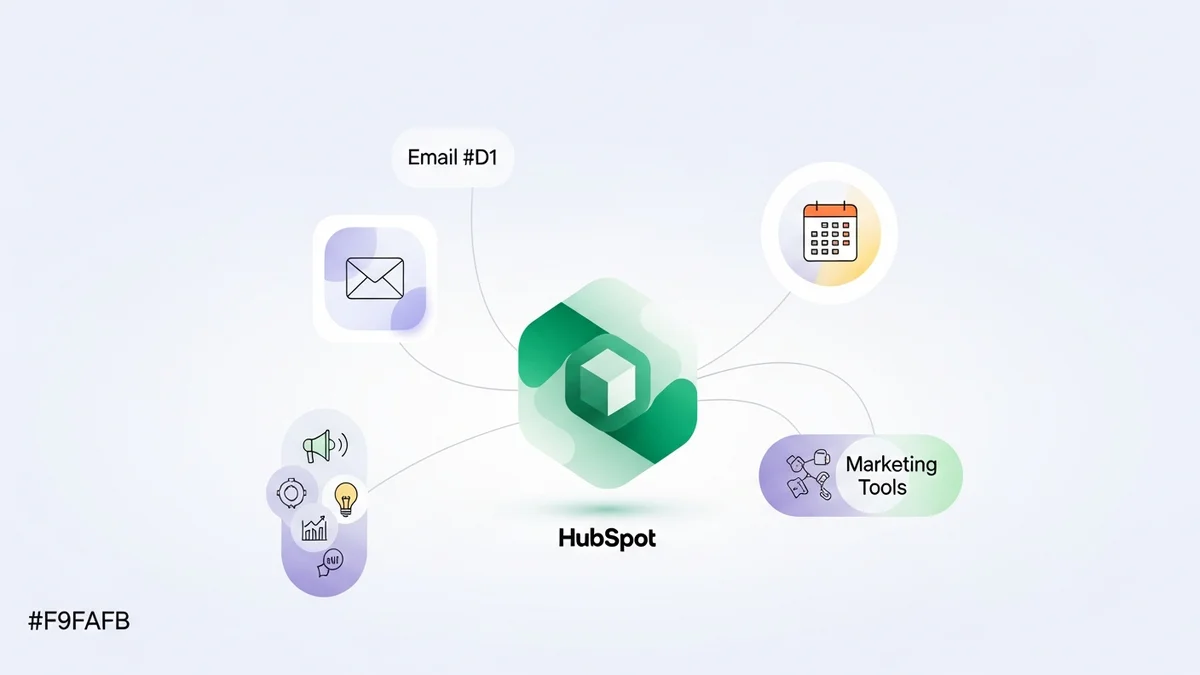
HubSpot's integration ecosystem is one of the most frequently cited reasons startups choose it over competitors. With over 1,000 native integrations available through its App Marketplace, HubSpot CRM connects to virtually every tool a modern startup uses — from contract management to revenue intelligence to scheduling automation. But breadth doesn't always mean depth. This review examines what HubSpot's integrations actually deliver, where they fall short, and whether the investment makes sense for your stage.
What Are HubSpot Integrations?
A HubSpot integration connects a third-party tool directly into the CRM interface, allowing data to flow bidirectionally without requiring users to leave HubSpot. These integrations live inside HubSpot's App Marketplace and range from one-click native connectors to API-based custom builds.
The practical effect: your sales reps can create and send contracts, enrich lead data, schedule meetings, and log call recordings all from within the HubSpot contact record. For startups with lean RevOps teams, this consolidation reduces context switching and data entry errors significantly.
HubSpot integrations span five primary categories: Sales, Marketing, Customer Service, RevOps, and Content Management. Each Hub (Sales Hub, Marketing Hub, Service Hub, etc.) has its own set of relevant integrations, though many work across multiple Hubs depending on your subscription tier.
Top HubSpot Integrations for Sales Teams
1. Salesforce Bidirectional Sync
The Salesforce integration is the most enterprise-relevant in HubSpot's marketplace. It provides a bidirectional sync between both platforms, allowing companies that run Salesforce as their system of record while using HubSpot for marketing to keep contact data, deal stages, and activity logs aligned. The sync runs on a configurable schedule and supports field-level mapping. For startups that inherited a Salesforce instance from an acquisition or investor requirement, this integration prevents the typical dual-entry nightmare.
2. Juro (Contract Automation)
Juro's HubSpot integration allows sales reps to generate, send, and track contracts directly from a HubSpot deal record. When a deal reaches a specific pipeline stage, reps can trigger a contract template populated with CRM data — company name, deal value, contact details — without switching tools. Contract status then updates back into HubSpot, giving managers visibility into where deals are stalling at the legal stage. For B2B startups with high contract volume, this eliminates a major pipeline bottleneck.
3. Chili Piper (Meeting Scheduling)
Chili Piper connects to HubSpot's form submissions and lead routing logic to book qualified leads directly onto sales rep calendars the moment they convert. Unlike HubSpot's native meetings tool, Chili Piper handles round-robin routing based on territory, deal size, or rep availability. It logs scheduled and completed meetings back to HubSpot contact records automatically.
4. ZoomInfo (Data Enrichment)
ZoomInfo's integration auto-enriches HubSpot contact and company records with verified firmographic and demographic data — headcount, revenue range, technology stack, direct dials. Enrichment triggers on new contact creation or on a scheduled basis for existing records. For outbound-heavy startups, this eliminates manual research and keeps pipeline data accurate without a dedicated data team.
5. Gong (Revenue Intelligence)
Gong records, transcribes, and analyzes sales calls, then pushes key data points — next steps, competitor mentions, risk signals — back into HubSpot deal records as activity entries. Managers can review call summaries inside HubSpot without leaving the CRM. This integration is particularly valuable for early-stage startups coaching new sales hires, where call quality directly impacts conversion rates.
6. Slack (Team Communication)
HubSpot's Slack integration sends real-time deal alerts to designated channels — new deals created, stage changes, deals won or lost. Sales managers can configure notification rules based on deal value thresholds or specific pipeline stages. It also enables basic HubSpot record lookups directly from Slack slash commands, reducing the need to open the CRM for quick data checks.
HubSpot Pricing and What You Get
Integration access in HubSpot is tied directly to your subscription tier. Many of the most powerful integration features — custom workflows triggered by integration data, advanced reporting across integrated tools, and API call limits — are gated behind paid plans.
| Plan | Monthly Price | Integration Relevance |
|---|---|---|
| Free CRM | $0 (unlimited users, up to 1M contacts) | Basic app marketplace access, limited API calls, no custom workflow triggers |
| Starter | From $20/month per seat | Removes HubSpot branding from forms/emails, basic automation, limited workflow steps |
| Professional | From $890/month (includes 5 seats) | Full workflow automation with integration triggers, custom reporting, sequences, 300 workflows |
| Enterprise | From $3,600/month (includes 10 seats) | Custom objects, advanced permissions, 1,000+ workflows, dedicated API rate limits |
Newsletter
Get the latest SaaS reviews in your inbox
By subscribing, you agree to receive email updates. Unsubscribe any time. Privacy policy.
The critical point for startups: the free tier supports connecting integrations, but you cannot build automated workflows that act on integration data without Professional ($890/month). A ZoomInfo enrichment that auto-updates a contact record and triggers a sales sequence requires Professional-tier workflow capabilities. This is where HubSpot's cost structure becomes a real planning consideration.
Pros and Cons of HubSpot Integrations
Pros
- 1,000+ native integrations with minimal setup: Most integrations install via OAuth in under five minutes, with pre-built field mappings that cover 80% of standard use cases out of the box.
- Unified activity timeline: Every integration interaction — contract views, enrichment updates, call recordings, meeting completions — surfaces in a single contact timeline, giving reps complete context before every touchpoint.
- Bidirectional data flow: Unlike some CRMs where integrations push data in only one direction, HubSpot's most popular integrations (Salesforce, Slack, Gong) sync changes back into the CRM, keeping records accurate without manual updates.
- Workflow automation across integrated tools: On Professional and above, you can build multi-step workflows triggered by integration events — e.g., when Gong flags a "pricing objection" in a call, automatically enroll the contact in a relevant email sequence.
- App Marketplace quality control: HubSpot vets marketplace apps, reducing the risk of broken integrations or security issues common with more open ecosystems.
Cons
- Full integration power requires Professional ($890/month minimum): The free and Starter tiers severely limit what you can automate with integrated data. Most startups need Professional to unlock the workflows that make integrations genuinely useful.
- Per-seat pricing compounds quickly: A 10-person sales team on Professional reaches $1,780+/month before any integration tool costs. Add ZoomInfo, Gong, and Juro and your total RevOps stack cost escalates to $3,000–5,000/month easily.
- Custom objects (needed for complex integrations) locked to Enterprise: Startups with non-standard data models — e.g., tracking projects, subscriptions, or assets alongside contacts — need Enterprise-tier custom objects for integrations to map data cleanly.
- API rate limits restrict high-volume syncs on lower tiers: Free and Starter accounts face lower API call limits, causing sync delays for high-volume integrations like ZoomInfo enrichment on large contact databases.
- Third-party integration costs add up: The integrations themselves often carry their own significant costs. Gong starts at roughly $1,200/user/year; ZoomInfo licenses run $10,000+/year for teams. HubSpot connects them, but doesn't reduce their price.
How HubSpot Integrations Compare to Competitors
| CRM | Native Integrations | Workflow Automation Entry Point | Integration Depth | Best For |
|---|---|---|---|---|
| HubSpot CRM | 1,000+ | $890/month (Professional) | Very High — bidirectional, timeline-unified | Inbound-led startups scaling marketing + sales together |
| Pipedrive | 400+ | $49/month (Advanced) | Medium — strong sales-focused integrations, lighter on marketing | Outbound sales teams wanting lower cost automation entry |
| ActiveCampaign | 870+ | $49/month (Plus) | High — strongest email + marketing automation integrations | Marketing-first teams where email sequences drive pipeline |
| Zoho CRM | 800+ | $20/month (Standard) | High within Zoho ecosystem, moderate externally | Budget-conscious startups already using other Zoho products |
Key differentiator vs. Pipedrive: Pipedrive's integrations are excellent for sales-specific tools but lack HubSpot's marketing automation depth. If your startup runs content marketing alongside outbound sales, HubSpot's unified approach eliminates the need for a separate marketing automation platform entirely.
Key differentiator vs. ActiveCampaign: ActiveCampaign delivers better email marketing integrations at a lower price point, but its sales CRM capabilities are noticeably weaker. For startups where sales reps need rich deal management alongside marketing automation, HubSpot is the more complete solution.
Key differentiator vs. Zoho CRM: Zoho CRM offers more affordable automation entry, but its third-party integration quality outside the Zoho ecosystem is inconsistent. HubSpot's marketplace integrations are generally more polished and better maintained by vendors because HubSpot's customer base is larger and more enterprise-oriented.
Who Should Use HubSpot Integrations
Best Fit
- Seed to Series B startups with 5–50 person sales and marketing teams who need a single platform where marketing automation, CRM, and RevOps tools all connect without custom engineering work.
- Inbound-led growth companies where content, SEO, and paid acquisition feed the CRM — HubSpot's native marketing tools combined with integrations create a loop that's hard to replicate on cheaper platforms.
- Teams already paying $800–1,000/month in separate tools (email marketing platform + CRM + form builder + live chat) who would consolidate costs by moving to HubSpot Professional.
- B2B SaaS startups with long sales cycles where Gong, Juro, and ZoomInfo integrations directly impact conversion rates and deal velocity.
Look Elsewhere If
- You're pre-product-market-fit with under 3 sales reps — the $890/month Professional floor is difficult to justify when you need lean tooling. Consider Pipedrive or Close at significantly lower cost until your sales motion is proven.
- Your integration needs are primarily outbound multichannel (LinkedIn + email sequences with AI personalization) — specialized tools deliver better results at lower cost for pure outbound workflows.
- You need complex custom data models on day one — Enterprise-tier custom objects at $3,600/month is too expensive for most early-stage startups. Attio handles custom data structures at a lower entry price.
Verdict
HubSpot's integration ecosystem is genuinely best-in-class for startups that have crossed into sustainable revenue and are scaling a combined marketing and sales motion. The 1,000+ integrations, unified contact timeline, and bidirectional data sync solve real problems that cobbled-together point solutions create.
The honest constraint is cost. The free tier lets you connect integrations but strips out the automation that makes them powerful. Professional at $890/month is the realistic entry point for a team that wants HubSpot integrations to actually drive workflow efficiency — and that's before the cost of the integrated tools themselves (Gong, ZoomInfo, Juro all carry significant licensing fees).
For startups between $500K–$5M ARR with a dedicated growth team, HubSpot's integration ecosystem is likely the most efficient path to a unified RevOps stack. For pre-revenue or very early-stage teams, the price-to-value ratio doesn't clear until your team size and deal volume justify the Professional tier investment.
Rating: 4.3/5 — Exceptional integration breadth and depth, held back only by the steep jump from free to full-featured automation pricing.