
The CRM Landscape Has Fundamentally Shifted — Here's What the Data Shows
If you're still thinking about your CRM as a contact database with a pretty interface, 2026 is going to be a rough year. The research is unambiguous: the platforms that dominated startup sales stacks in 2023 and 2024 by offering clean pipelines and decent integrations are no longer enough. CRM has crossed a threshold.
According to analysis from Patricia Egen Consulting, 2025 was the inflection point where CRM platforms "evolved from systems of record into systems of action." That shift is not marketing language — it reflects a genuine architectural change in how the best platforms now operate. Workflows trigger automatically. AI surfaces next-best actions in real time. And the CRM is no longer a tool your sales team uses; it's infrastructure your entire revenue function depends on.
For startups, this creates both opportunity and risk. The opportunity: tools once reserved for enterprise teams are now accessible at startup price points. The risk: picking the wrong platform — or the right platform with the wrong strategy — wastes capital you can't afford to burn. This guide breaks down exactly what the data says about where CRM is heading and which decisions will define startup success in 2026.
Five CRM Trends That Determine Startup Success in 2026
1. AI Is No Longer a Feature — It's the Foundation
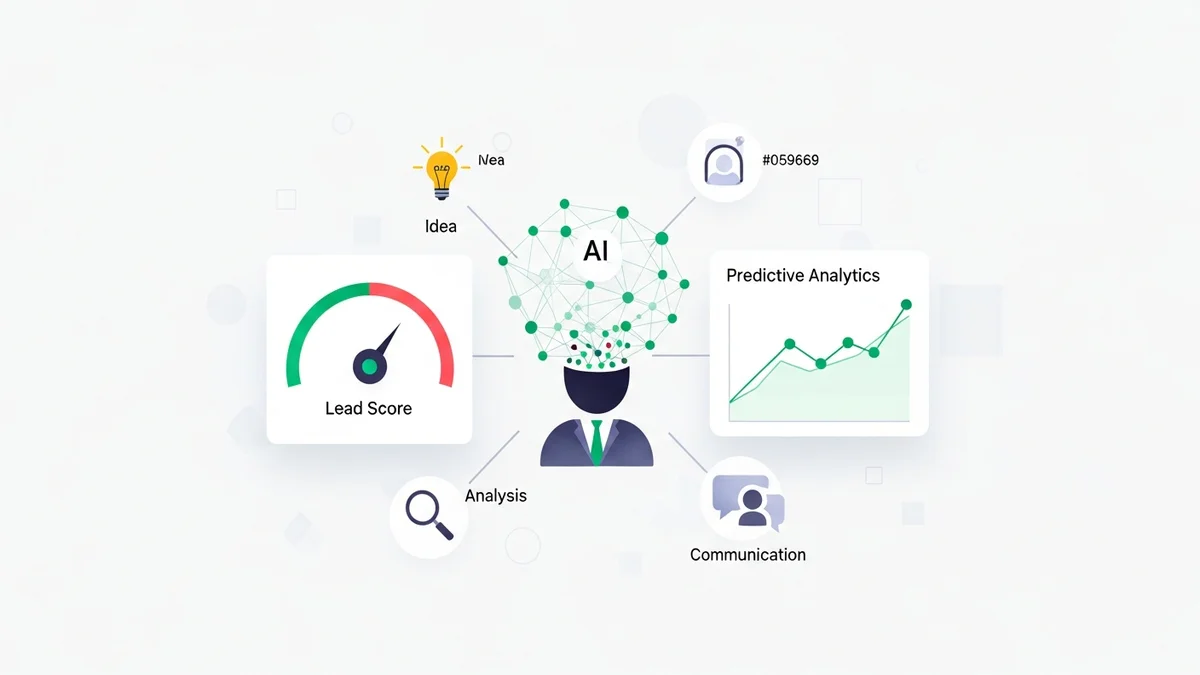
In 2024, AI in CRM meant a chatbot that drafted email templates. In 2025, AI became what Egen Consulting describes as "core CRM functionality" — predictive insights, automated recommendations, and real-time decision guidance baked into the platform's core logic rather than bolted on as a premium add-on.
What this means practically: if your CRM's AI features require a separate module purchase or sit behind an enterprise tier, you're already behind. Platforms like Freshsales have embedded AI (Freddy AI) into their standard workflow, surfacing deal health scores and contact engagement signals without requiring manual configuration. This is the baseline expectation for 2026, not a differentiator.
2. Context-Aware Automation Replaces Static Workflows
Static "if-then" automation served its purpose. In 2026, the expectation is adaptive automation — systems that adjust follow-up sequences, priority scoring, and outreach timing based on customer behavior, lifecycle stage, and historical performance data rather than rules set six months ago by a sales manager who has since left the company.
This is where platforms diverge sharply. ActiveCampaign has built its entire value proposition around behavioral automation that responds to real customer signals. Close takes a different approach, optimizing automation specifically for inside sales cycles where speed and call cadence matter more than behavioral segmentation. Neither is wrong — but the right choice depends entirely on your startup's sales motion.
3. Hyper-Personalization at Scale
Research from Dialectica identifies hyper-personalization as one of the defining forces reshaping CRM architecture. The underlying insight is straightforward: buyers have been conditioned by consumer experiences (Amazon, Netflix, Spotify) to expect interactions that feel individually tailored, and B2B sales is catching up fast.
For startups, this trend cuts both ways. The good news is that AI-powered personalization at scale was previously only achievable with large data science teams and enterprise platforms. The bad news is that it requires genuinely clean, well-structured data — and most early-stage startups have neither. If your CRM data is a mess of duplicates, incomplete fields, and inconsistent tagging, no amount of AI will generate meaningful personalization. Data quality is now a competitive moat.
4. Vertical CRM Specialization Is Accelerating
Dialectica's research points to the "rise of vertical CRM" as a meaningful market shift — platforms built specifically for real estate, legal, healthcare, SaaS, or recruiting rather than horizontal tools trying to serve everyone. For most startups, this doesn't mean abandoning general-purpose platforms, but it does mean the general-purpose platforms that win are the ones with the most flexible customization.
Attio is worth examining here. It's built around data objects and relationships rather than traditional CRM conventions, which makes it unusually adaptable to non-standard business models. For startups with complex relationship graphs — marketplaces, platforms, community-led growth models — that flexibility matters more than a polished sales pipeline view.
5. Integration Architecture Defines the CRM's Actual Value
Egy Consulting's 2025 analysis found that CRM integration became "the central hub connecting marketing, support, accounting, and ERP systems" for high-performing organizations. This isn't about having a long list of native integrations — it's about whether your CRM can serve as the authoritative source of customer truth across your entire stack.
Newsletter
Get the latest SaaS reviews in your inbox
By subscribing, you agree to receive email updates. Unsubscribe any time. Privacy policy.
Startups that treat their CRM as one tool among many connected by fragile Zapier zaps are going to hit a wall. The platforms winning in 2026 are the ones where data flows cleanly in both directions — not just from CRM to email, but from support tickets back into deal context, from billing events into renewal risk scores, from product usage into lead scoring.
CRM Platform Comparison: 2026 Trend Readiness for Startups
Not all CRMs are equally positioned for the trends above. The table below compares key platforms across the dimensions that matter most for 2026 startup success.
| Platform | AI-Native Features | Adaptive Automation | Integration Depth | Best Startup Fit | Complexity Ceiling |
|---|---|---|---|---|---|
| HubSpot CRM | Strong (Breeze AI) | High — workflow branching based on behavior | Very High — native marketing/support suite | Full-stack GTM teams | High — scales to enterprise |
| Salesforce | Very Strong (Einstein AI) | Very High — fully programmable | Enterprise-grade | Series B+ with dedicated RevOps | Very High — requires admin resources |
| Zoho CRM | Strong (Zia AI) | High — Zoho Flow + native automation | High — 40+ native Zoho apps | Cost-sensitive teams needing full suite | Moderate — accessible for non-technical users |
| Freshsales | Strong (Freddy AI) | Moderate — good for standard sales cycles | Moderate — strong within Freshworks ecosystem | Early-stage inside sales teams | Low-Moderate — quick time to value |
| Pipedrive | Moderate — AI sales assistant | Moderate — workflow automation available | High — broad third-party marketplace | Pipeline-focused sales teams | Low — designed for simplicity |
| Close | Moderate — AI email drafting | Moderate — sequences and cadences | Moderate — REST API + key integrations | High-velocity inside sales | Low — sales-only focus |
| Attio | Emerging — data-driven insights | Moderate — sequence and workflow builder | Moderate — API-first architecture | Technical founders, complex relationship models | Low-Moderate — flexible but requires setup |
| Salesflare | Moderate — automated data capture | Moderate — email sequences | Moderate — good LinkedIn + email integration | Small B2B teams minimizing manual entry | Very Low — minimal configuration required |
Why CRM Strategy Now Outweighs CRM Software Selection
Here's an uncomfortable truth the CRM industry doesn't advertise: according to Egen Consulting's 2026 analysis, "results will depend less on vendor selection and more on CRM architecture, data quality, governance, and alignment with business goals." Platform maturity has reached a point where the gap between the top five CRMs for any given use case is narrower than it's ever been.
What actually separates high-performing startup revenue teams from struggling ones in 2026 is not which CRM logo is in their stack. It's whether they've answered four foundational questions:
Data Governance: Who Owns What
Most early-stage startups have no answer to this. Leads come in from three sources, get entered differently by two sales reps, and sit as duplicates in a system nobody audits. AI features cannot compensate for this. In fact, AI accelerates bad data problems — if your lead scoring model trains on corrupt data, it trains faster on corrupt data.
Before evaluating AI-powered features in any platform, audit your current data health. The startups winning with CRM in 2026 are the ones that invested in data hygiene in 2024 and 2025.
Process Alignment: CRM Reflects Reality, Not Aspiration
A pipeline with twelve stages that nobody actually follows is worse than a four-stage pipeline that maps to how deals actually move. The most dangerous outcome of a CRM implementation is a system that leadership trusts but that sales reps quietly work around. The CRM's architecture should document actual behavior, then optimize it — not prescribe ideal behavior that never materializes.
Integration Strategy: Bidirectional, Not One-Way
Pushing data from CRM to email is table stakes. The strategic advantage comes from pulling data back in: support tickets that update deal health, product usage signals that trigger expansion conversations, billing events that flag churn risk. If your CRM integration strategy is primarily about sending automated emails, you're using it as a distribution tool, not a revenue intelligence platform.
Scalability Planning: Today's Simple Setup, Tomorrow's Technical Debt
This is where many startups get burned. A CRM configuration that works beautifully for a six-person team can become a tangled, unmaintainable mess at thirty people. The platforms that appear simplest at the start — minimal configuration, fast onboarding — are sometimes the hardest to restructure when your process complexity grows. Choose your platform for where you'll be in eighteen months, not where you are today.
The Practical 2026 CRM Checklist for Startups
Based on the trend data above, here's what forward-looking startup revenue teams should be doing or evaluating right now:
Audit Your Current CRM Health
Pull a report on data completeness — what percentage of contacts have valid emails, company size, industry, and last activity date? If you're below 70% on core fields, you have a data problem that no new CRM feature will solve. Fix the foundation before adding sophistication.
Evaluate AI Feature Depth, Not Just AI Marketing
Every CRM vendor is leading with AI messaging in 2026. The question is whether those features are cosmetic (AI-assisted email subject line suggestions) or structural (predictive deal scoring, dynamic workflow adaptation, anomaly detection in pipeline health). Demand a demo of the actual AI features in a realistic sales scenario before committing.
Map Your Integration Requirements Before Platform Selection
List every tool your revenue team uses and identify which ones need to exchange data with your CRM. Native integrations are more reliable than middleware, but middleware is better than no integration. Platforms like Monday CRM offer visual integration frameworks that non-technical teams can manage; others require developer resources for anything beyond basic connectivity.
Define Your Personalization Data Model
Hyper-personalization at scale requires structured data about customer attributes, behavior, and preferences. Define which data points your sales and marketing teams need to deliver genuinely personalized outreach, then verify that your CRM can store, segment, and act on that data. If the answer is "we'd need custom fields and a complex tagging system," factor that implementation cost into your platform evaluation.
The Honest Assessment: Where CRM Is Actually Headed
The most significant shift in CRM for 2026 is not a feature or a category — it's a change in what the software is for. For the better part of a decade, CRM's primary job was to help sales managers track what their reps were doing. That's a monitoring function. The platforms winning in 2026 are the ones that have flipped this: the CRM's job is to help individual reps and teams perform better, with management insight as a byproduct.
Practically, this means the best CRMs in 2026 surface the right information at the right time without requiring reps to go looking for it, automate the administrative burden that previously killed selling time, and generate insights that make salespeople demonstrably more effective in customer conversations.
The startups that will look back on 2026 as the year their revenue trajectory changed are the ones treating CRM not as a software subscription but as a strategic asset — investing in data quality, process design, and platform depth rather than chasing the next feature announcement. The tools have matured. The differentiator is now the strategy behind them.