The CRM Landscape in February 2026: Six Shifts Every Startup Founder Needs to Act On
If you last evaluated your CRM more than 18 months ago, you are looking at a fundamentally different market than the one you evaluated. The CRM space has compressed several years of evolution into a single cycle. AI has stopped being a feature and started being infrastructure. Revenue intelligence has gone from a luxury to an expectation. And the consolidation wave that analysts predicted has arrived — faster and harder than most founders anticipated.
This guide breaks down the most significant CRM trends heading into Q1 2026 and, more importantly, what each one means for startups making buying decisions right now. These are not abstractions. They are criteria that should directly change which platforms you shortlist.
1. Agentic AI Has Crossed the Threshold — Your CRM Should Be Running Itself
The conversation about AI in CRM has fundamentally changed. In 2024 and early 2025, the question was "does this CRM have AI features?" By February 2026, the question is "what can this CRM's AI do without a human in the loop?"
This is the shift to agentic AI — systems that don't just surface suggestions but take autonomous action. We are talking about CRMs that detect a contact mentioning an office expansion in an email and update the account automatically, that reschedule follow-ups based on real-time calendar availability, and that adjust campaign messaging mid-flight based on behavioural signals — all without a rep manually clicking anything.
Gartner projects that by the end of 2026, 40% of enterprise applications will feature task-specific AI agents, up from less than 5% in 2025. That is not incremental change. That is a category redefinition happening in real time.
What This Means for Platform Selection
Salesforce's Agentforce platform has already logged over 18,500 deals incorporating its agentic capabilities, making it one of the most mature implementations in the market. HubSpot CRM has embedded its Breeze AI suite directly into core plans — not as an upsell — giving founders access to AI-generated email drafts, meeting prep summaries, and prospecting agents at no additional cost.
The practical test for any CRM you are evaluating: can it take a defined action end-to-end without a human approving each step? If the answer is no, you are buying a tool that will feel dated within 12 months.
2. AI Is Now Table Stakes — Stop Paying Extra for It
Closely related but distinct from agentic AI is a simpler market reality: basic AI functionality in CRM is no longer a premium feature. Around 61% of companies now plan to integrate AI into their CRM within the next three years, and the leading platforms have already made that integration standard.
HubSpot CRM includes Breeze AI in its core plans. Attio has built AI natively into its data model from day one, using it for contact enrichment, deal scoring, and workflow automation as part of its base offering. These are not bolt-ons. They are architectural decisions that make AI inseparable from how the product works.
The Red Flag to Watch For
If a vendor is charging you extra for lead scoring, email suggestions, or predictive deal health — features that have been table stakes in competitive platforms for over a year — that is a signal about where that vendor sits in the market. They are monetising yesterday's innovation. For a startup that needs to move fast and get ROI from its tools within a quarter, that matters enormously.
Platforms like Pipedrive and Zoho CRM have both been integrating AI into their mid-tier plans, recognising that keeping it gated to premium tiers was becoming a competitive liability. The direction of the entire market is clear: AI is infrastructure, not a feature tier.
3. Revenue Intelligence Is Replacing the Quarterly Forecast Call
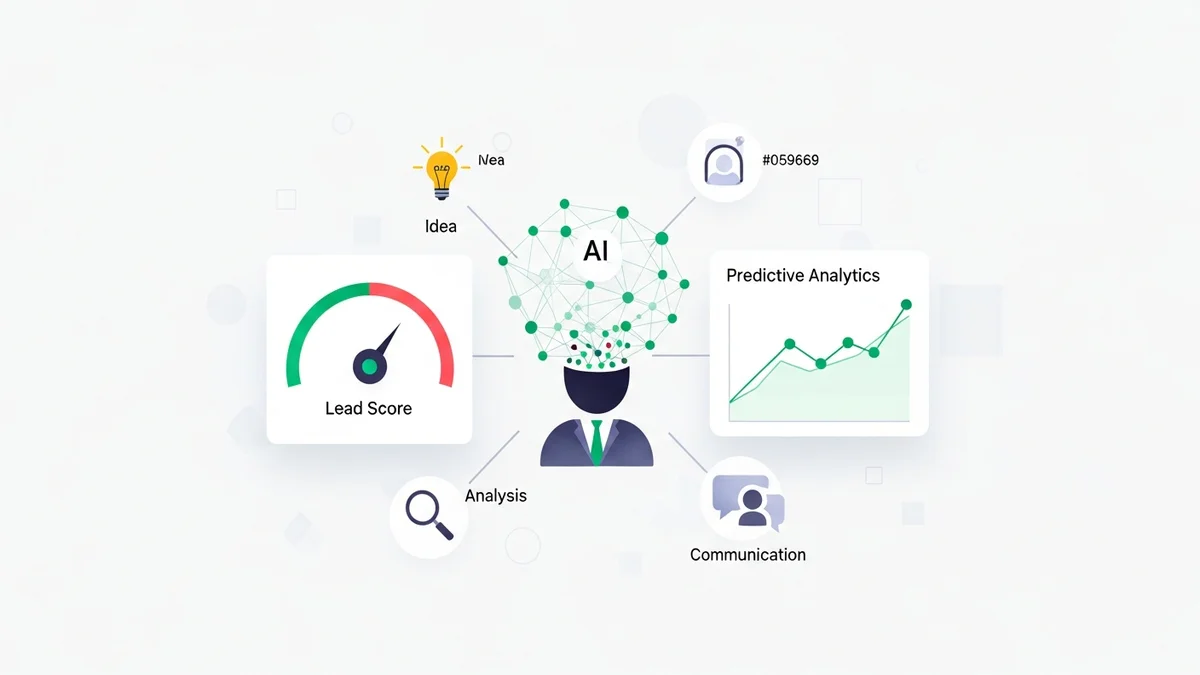
One of the most consequential shifts in enterprise CRM has now filtered down to the startup tier: revenue intelligence. This means using AI to analyse pipeline velocity, communication patterns, and deal progression to surface predictive insights — not just reporting on what happened, but telling you what is about to happen and why.
Gartner published its first Magic Quadrant for Revenue Action Orchestration in December 2025, which is the analyst community's signal that a category has reached maturity. The Clari and Salesloft merger in late 2025 — combining pipeline management with conversation intelligence — is the market's equivalent signal: buyers want this capability unified, not spread across multiple tools.
Newsletter
Get the latest SaaS reviews in your inbox
By subscribing, you agree to receive email updates. Unsubscribe any time. Privacy policy.
IDC projects that by 2026, nearly half of all new CRM-related investment will go into data architecture, AI infrastructure, and analytics rather than additional licenses or seat expansion. For startups, this has a direct implication: the CRM you select should actively flag at-risk deals, not just display a pipeline you have to interpret yourself.
Practical Benchmarks for Startup Revenue Intelligence
| Capability | What to Expect in 2026 | Red Flag |
|---|---|---|
| Deal health scoring | AI-generated score based on activity signals, not just stage age | Manual scoring only, or score requires add-on |
| Pipeline velocity tracking | Average time per stage, automated alerts on stalled deals | Static reports only, no real-time alerting |
| Forecast accuracy | AI-assisted projection with confidence intervals | Rep-submitted forecasts with no algorithmic validation |
| Communication analysis | Sentiment and engagement tracking across email + calls | No integration with email/calendar activity |
Salesforce remains the most sophisticated implementation of revenue intelligence at scale, but for startups that cannot absorb a Salesforce implementation cost, platforms like Close offer pipeline velocity tools and built-in call intelligence at a price point that makes sense for teams under 25 people.
4. Product-Led Growth CRMs Are Winning the Startup Segment
The startup CRM market has split into two distinct philosophies: legacy platforms that were built for top-down enterprise sales motions and retrofitted for smaller companies, and a new generation built natively for product-led growth (PLG).
Attio is the clearest example of the latter. The company raised $116 million and is reportedly quadrupling its ARR, driven almost entirely by word-of-mouth adoption within PLG-native startup teams. Attio's architecture treats the data model itself as configurable, which means it bends to fit product-qualified lead workflows without requiring a Salesforce admin equivalent to set it up.
The PLG-native CRM philosophy prioritises three things that traditional CRMs often sacrifice: self-service onboarding measured in minutes rather than days, built-in collaboration that does not require a separate tool layer, and PQL (product-qualified lead) identification as a first-class concept rather than a workaround built on custom fields.
Who Should Lean PLG and Who Should Not
If your startup acquires customers through a free tier, a trial, or bottom-up adoption within teams, a PLG-native CRM will create significantly less friction than a traditional pipeline-centric tool. If your business is outbound-heavy or enterprise sales with long cycles and large ACV, the traditional structured pipeline model — offered well by Pipedrive or Close — will likely serve you better.
The mistake many founders make is choosing a CRM for the sales motion they aspire to rather than the one they actually run today. Be honest about your current motion.
5. Stack Consolidation Is Eliminating the 10-Tool Sales Setup
Two years ago, a typical early-stage startup might run a CRM, a separate email sequencing tool, a call recording platform, a meeting scheduler, and a deal room tool as five separate subscriptions with five separate sets of logins and data silos. That era is ending.
CRM platforms in 2026 are aggressively absorbing adjacent functionality. The business logic is straightforward: the more of the workflow that lives inside the CRM, the better the AI can analyse patterns across the full customer journey, not just the subset visible within one tool.
This consolidation creates a genuine opportunity for startups to reduce their monthly tool spend while actually improving data quality — because data that used to get lost in the handoff between tools now lives in one system. ActiveCampaign has pushed heavily into this consolidated model, combining CRM, email marketing, and automation into a single platform that eliminates the need for a separate marketing automation tool for many early-stage companies.
What to Audit Before Your Next Renewal Cycle
Before renewing any sales tool subscription, audit whether your primary CRM now includes that functionality natively. Email sequencing, meeting scheduling, and basic call logging are increasingly standard inclusions. Paying a separate subscription for any of these in 2026 is likely redundant spend.
For startups evaluating CRMs for the first time, use this consolidation trend as an evaluation criterion: how many tools from your current stack does this platform replace? A platform that replaces three tools at a similar price point to one is a fundamentally different ROI calculation than a standalone CRM.
6. Privacy-First Architecture Is Becoming a Differentiator, Not Just Compliance
The fifth major shift is less visible than AI but equally consequential for startups operating in regulated markets or selling to enterprise buyers. Privacy-first CRM architecture — where data residency, consent management, and audit trails are built into the platform rather than bolted on — has moved from a compliance checkbox to a genuine competitive differentiator.
For B2B SaaS startups trying to close enterprise deals, the security review that used to happen at contract signing now happens during the trial. Procurement teams and security reviewers are asking CRM-related questions earlier in the sales cycle. A CRM that cannot provide clear answers about where customer data is stored, who has access to it, and how it handles deletion requests creates a friction point in your own sales motion.
The Startup-Specific Privacy Calculus
Early-stage founders often deprioritise privacy architecture decisions, assuming it is a problem for later when they have a dedicated compliance function. This is the wrong frame. The CRM you choose now will contain your first several thousand customer records, your deal history, and your communication archive. Migrating that data while simultaneously trying to pass enterprise security reviews is a significantly harder problem than choosing a privacy-compliant platform from the start.
Salesflare and Zoho CRM have both invested in GDPR-compliant data handling as core product features, including clear data processing agreements and configurable data residency options. For startups with European customer bases or aspirations to move upmarket, these are not trivial considerations.
How to Apply These Trends to Your CRM Decision Right Now
Trend analysis is only useful if it changes what you do. Here is a practical framework for applying the six trends above to a CRM evaluation in early 2026.
First, eliminate any platform that treats AI as a premium add-on. The baseline expectation has shifted. Second, shortlist platforms that have an explicit answer to the question "how does your CRM support a product-led growth motion?" — even if your current motion is not fully PLG. Third, calculate what your current stack costs across all sales tools, not just the CRM line item, and evaluate platforms on total stack replacement value.
For most seed to Series A startups, the decision today comes down to three categories. For outbound-heavy sales teams, Close or Pipedrive offer mature pipeline tooling with increasingly strong AI layers. For PLG-native companies, Attio has earned its momentum and the $116M raise was not speculative — it reflects genuine product-market fit with a specific buyer profile. For startups that need the full platform — CRM plus marketing plus automation — HubSpot CRM remains the most complete solution at the growth stage, particularly now that Breeze AI is included in core plans.
The worst outcome in 2026 is choosing a CRM based on 2023 criteria — evaluating it primarily on pipeline visualisation, contact storage, and integration count. Those were the right questions two years ago. Today, the questions are about autonomous action, revenue intelligence, and consolidation value. Ask them, and you will make a significantly better decision.